



Best Commercial Exercise Bike
How to Choose the Best Commercial Exercise Bike for Your Gym
Buying a commercial exercise bike isn't the same as picking one for your home gym. You're looking at 8-12 hours of daily use, sweaty members, and equipment that needs to last 5-7 years minimum. Get it wrong, and you're looking at constant repairs and unhappy members.
Here's what matters and what you should actually look for when comparing options.
The Three Main Types of Commercial Exercise Bikes
Upright Bikes
Upright bikes are the standard choice for most gyms. They put the rider in a cycling position that engages the core and upper body more than recumbent bikes. Members who want a more intense workout usually prefer these.
Good upright bikes should have an adjustable seat with fore/aft and up/down movement. Look for a 7-inch seat adjustment range at minimum. The pedals need toe cages or SPD clips. Some clubs are switching to dual-sided pedals to accommodate both casual riders and cyclists.
If you're looking at upright models, check the flywheel weight. A 20kg flywheel gives you a smoother ride than a 14kg one. Members notice the difference immediately.
Recumbent Bikes
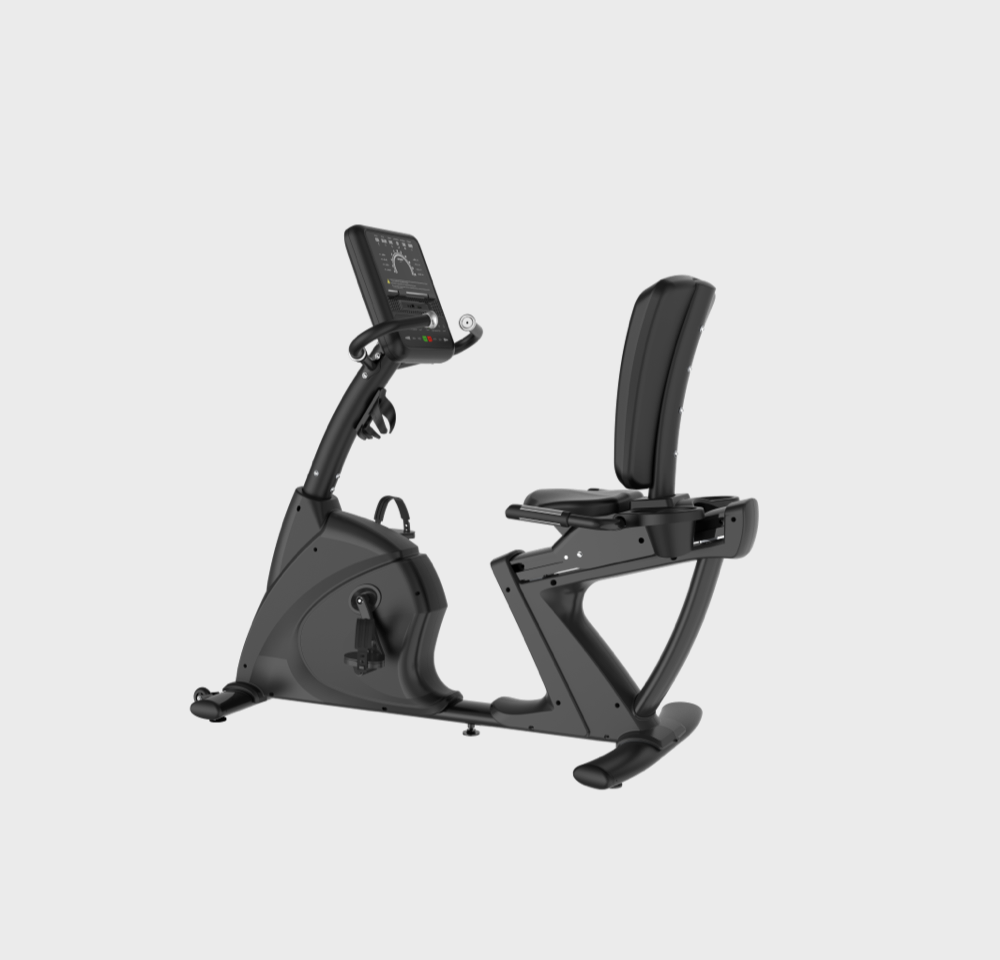
Recumbent bikes put the rider in a reclined position. They're more comfortable for longer sessions and easier on the lower back. These are essential if your gym serves an older demographic or people rehabbing from injuries.
The key features to check are seat padding and back support. A good recumbent bike has lumbar support and a seat that doesn't bottom out after 6 months of heavy use.
Indoor Cycling Bikes
These are the bikes you see in spin classes. They have a fixed gear and no freewheel, meaning you can't coast. The resistance comes from a friction pad or magnetic system against the flywheel.
Indoor cycling bikes need to handle aggressive riding. Look at the frame construction. A 2mm thick steel frame handles the pounding better than lighter builds. The drivetrain should be quiet. Chain-driven bikes are common but belt-driven models like the M-5818 Indoor Bike

Key Specs That Actually Matter
Marketing specs can be misleading. Here's what to focus on:
- Flywheel weight: Heavier is smoother. For upright bikes, 18-25kg is the sweet spot. Anything under 15kg feels cheap.
- Drive system: Belt drives are quieter and need less maintenance than chains. Budget 20% more for belt-driven models upfront, but save on replacements.
- Warranty: Look for 3-5 years on parts and 10+ years on the frame. Anything less signals quality concerns.
- Console: Members want basic metrics - time, distance, calories, RPM. Touchscreens are nice but add $500-1000 to the price and fail more often.
- User weight capacity: 350 lbs minimum for commercial. 400 lbs is better if your gym serves a diverse crowd.
What to Avoid
Some red flags you should watch for:
- Plastic crank arms. They break. Every time.
- Non-replaceable pedals. You will replace pedals every 18-24 months.
- Proprietary parts. If you can't buy a replacement belt from a standard supplier, skip it.
- Seat posts that don't have clear markings for adjustment. Members will struggle and your staff will waste time.
Comparing Brands and Price Points
The market has three tiers. Entry-level commercial bikes run $800-1500 per unit. Mid-range goes $1500-3000. Premium hits $3000-6000.
Entry-level bikes work for hotel gyms and small studioses with light use. Mid-range is where most commercial gyms land. Premium bikes from brands like Life Fitness and Precor last longer but cost significantly more.
There's a middle ground that more gym operators are finding. Direct-from-manufacturer brands like MBH offer commercial-grade bikes at factory pricing. The M-7808R Upright Bike

Matching Your Floor Layout
Space planning matters more than you think. A standard upright bike takes about 4x2 feet of floor space. Recumbent bikes need more - roughly 5x2.5 feet. Indoor cycling bikes take up similar space to uprights but need more room around them for movement during classes.
If you're mixing cardio types, group them sensibly. Put recumbent bikes near the stretching area. Upright bikes near the weight floor. Indoor cycling bikes in a dedicated studio space.
Maintenance Reality Check
Commercial bikes need attention. Expect to spend 15-30 minutes per bike per month on maintenance. That's cleaning the frame, checking bolts, and lubricating moving parts.
The most common failures are:
- Pedal bearings (every 2 years)
- Seat adjustment mechanisms (every 3 years)
- Console buttons (every 4-5 years)
- Drive belts (every 5-7 years)
Pick a supplier who stocks replacement parts. A bike sitting idle for 3 weeks while you wait for a $5 part costs you money. MBH offers complete aftersales service on all their equipment, which saves you that headache.
Final Recommendations
For most commercial gyms, here's my advice:
- Start with upright bikes. They appeal to the broadest range of members.
- Add recumbent bikes if you have members over 50 or a rehab population.
- Dedicate a separate space for indoor cycling bikes if you plan to offer classes.
- Buy from a manufacturer that offers direct pricing and solid support.
Don't get distracted by flashy consoles and apps. The bike itself needs to be solid. A good frame, smooth drivetrain, and comfortable seat will keep members happy for years. That's what counts.
If you're outfitting a new facility or replacing aging equipment, start evalsuating your options now. Lead times on commercial bikes can run 4-8 weeks depending on volume. Plan ahead and you'll avoid the last-minute scramble.
